
How Commercial Laundry Pickup and Delivery Works
See how commercial laundry pickup and delivery works for Glendale businesses, from scheduling and intake to returns and custom quotes.
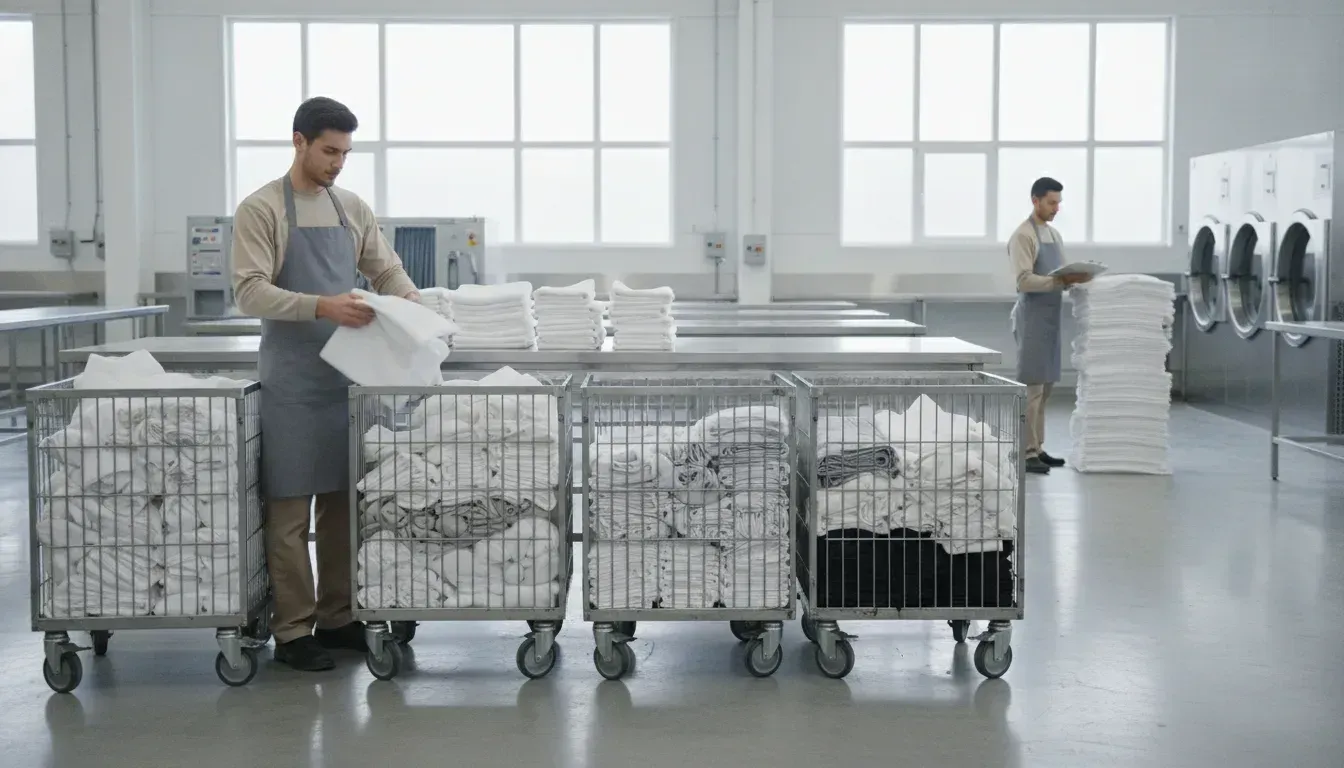
Commercial laundry pickup and delivery works as a repeatable business process. You and the provider agree on textile types, volume, pickup cadence, handling needs, and a return time. They collect the soiled items, clean and finish them, then bring them back before the next service period. For a restaurant, hotel, gym, or salon, the point is not one clean load. The point is having linens, towels, and uniforms ready when staff and guests need them.
Discuss a commercial laundry pickup and delivery plan with Washed Works
A useful program starts with how your operation uses textiles. It does not start with a generic per-pound price. The provider should explain the schedule, the handoff, the finish, and what happens when volume changes. Washed Works offers this kind of commercial service for businesses in Glendale and nearby areas, with a custom quote based on the work you actually need.
What Commercial Laundry Pickup and Delivery Includes
Commercial laundry pickup and delivery usually joins six jobs that have to work together. Miss one, and clean textiles can arrive late or in the wrong form.
- Service scope: Name the linens, uniforms, towels, aprons, and other textiles that will be processed.
- Scheduling: Set a pickup and return cadence that matches usage, storage, and busy periods.
- Handoff: Decide where items sit, who releases them, and how unusual loads are noted.
- Processing: Sort, wash, dry, fold, press, hang, or finish items to the agreed standard.
- Reconciliation: Compare the returned order with the pickup record and report gaps quickly.
- Communication: Name who handles schedule changes, rush needs, quality issues, and volume swings.
These details matter because the laundry is part of the operating day. A restaurant needs napkins and aprons before service. A gym may need towels between peak classes. A salon may need clean towels and capes all afternoon. A hotel may need a larger inventory and a stricter return check. Each business should confirm that the provider can handle its materials and its workflow.
Washed Works describes commercial work for restaurants, hotels, gyms, salons, and other businesses. The commercial laundry page lists linens, uniforms, towels, and industry-specific textiles, plus flexible scheduling and on-time delivery. Use that list as a checklist, then add the items that are unique to your site.
How the Commercial Laundry Pickup and Delivery Process Works
Treat the first cycle as a setup, not as a one-off order. The steps below are the questions to settle before you depend on the service.
- Define the inventory. List what you send, how often each item is used, and which pieces need special care.
- Set volume and return targets. Estimate a normal week, then name the days and times clean goods must be back.
- Coordinate the handoff. Agree on location, access, a contact person, and how bags or bins are labeled.
- Process and finish. Confirm sorting, wash method, and whether items return folded, pressed, or hung.
- Check and reconcile. Compare the delivery with the pickup record and report shortages the same day.
1. Define the textile inventory and service scope
Start with a plain list. Include table linens, kitchen towels, aprons, sheets, bath towels, gym towels, salon capes, uniforms, and anything else that leaves the building. Note which items are used every day and which appear only for events. Mark fabrics that should stay separate, such as heavily soiled kitchen textiles or items with a care label that rules out a standard wash.
Also write down the finish you expect. Should towels be folded to a set size? Should uniforms come back on hangers? Do two departments need separate bundles? These are operating rules. Settle them before the first regular pickup so the returned order matches how your team restocks.
2. Set volume, frequency, and par levels
Estimate how much laundry a normal week produces. Then count what must be clean at the start of your busiest shift. A workable plan covers items in use, items waiting for pickup, items being cleaned, items in transit, and a backup pile. That total is often called a par level. It is the stock you need so service continues while part of the inventory is away.
Frequency should follow real use. A steady daily operation may want a recurring route. A seasonal or event business may need a plan that can grow and shrink. Ask which days are available, how much notice an extra load needs, and what happens when a regular pickup falls on a holiday. Do not copy a household same-day rule onto a business account. Business timing is about the next service period, not one personal order.
3. Coordinate the pickup handoff
A clear handoff makes the rest of the cycle easier to audit. Agree on the door or dock, access notes, operating hours, and the person who releases the load. If several departments or sites share one account, label bags, carts, or bins so each order can be traced. A short pickup note is enough: date, location, rough counts, and anything unusual.
Before the items leave, pull out non-laundry objects and separate pieces that need different treatment. Note heavy stains, existing damage, specialty fabrics, and known shortages. That note is the shared reference if the return does not match. It is also the right place to flag a one-time event load so it is not treated as the new normal volume.
4. Complete intake, sorting, and processing
After collection, the provider receives the order and sorts it. The exact path depends on textile type, soil, color, fabric, and the finish you requested. Restaurant linens, gym towels, salon capes, and uniforms may not belong in one wash. Ask what the provider accepts, what it runs separately, and what it will not process. A general commercial service is not automatically a fit for regulated healthcare laundry or chemical contamination.
Processing can include washing, drying, folding, pressing, hanging, and bundling. Do not assume every shop uses the same machines or the same finish standard. Ask how your categories are identified, and how the team marks pieces that need a rewash or a closer look. If cleaning-product choice matters to your facility, the EPA guide to greener cleaning products explains how Safer Choice and Design for the Environment labels identify products with safer ingredients. Use that as a question list, not as a claim that any one laundry plant uses a certified product.
5. Check the order before it returns
Before clean textiles come back, someone should review them against the service notes. Your team should know what to look for at delivery: cleanliness, dryness, counts, leftover stains, damage, fold or hang style, and separation by department. A short acceptance routine catches a problem while the pickup record is still easy to find.
Quality control is not a promise that every piece will look identical. Different fabrics and stains need different treatment. Ask how rewash requests, remaining stains, damaged pieces, and items that cannot be processed are written down and sent back to you. A pattern is more useful than a one-time complaint.
6. Return and reconcile the clean textiles
The last step is the return handoff. Clean items should arrive at the agreed spot, on the planned cadence, in a form your team can put straight into use. Give one role the job of confirming the delivery, comparing it with the pickup note, and reporting exceptions the same day.
Reconciliation shows patterns. A repeated shortage may be a counting error, a lost piece, or a par level that is too low. A repeated stain may need a different pre-sort. If the business grows, update the original schedule instead of treating the first quote as permanent. That review is part of the process, not a failure of it.
Which Pickup and Delivery Schedule Fits the Business?
The right schedule depends on how fast you use clean textiles and how much backup stock you can store. Use the models below as planning questions. They are not a promise that every provider offers every option.
Commercial laundry scheduling considerations
- Recurring service: This may fit when you produce a steady flow of linens, towels, uniforms, or other textiles. Questions to ask: What pickup frequency, return time, and notice rules are available?
- Variable service: This may fit when volume moves with occupancy, appointments, events, or season. Questions to ask: How are extra loads, schedule changes, and busy weeks handled?
- Multi-site service: This may fit when several departments or locations share an account or need separate returns. Questions to ask: How are orders labeled, separated, delivered, and reconciled?
- Contingency plan: This may fit when a missed pickup or late return would interrupt guest-facing work. Questions to ask: Who is contacted, what notice is given, and what is the next step?
Price usually follows textile mix, volume, frequency, special handling, and the delivery route. Washed Works treats commercial laundry as a custom quote, not a published one-rate menu. That is why the inventory and schedule talk comes first. The quote should describe the work, not a household per-load price copied onto a business.
If you are still deciding whether to own machines or hire the work out, read the guide on buying versus outsourcing high-volume laundry machines. If you are comparing vendors, the article on how to choose a commercial laundry service covers evaluation questions and warning signs. This page stays on the operating cycle itself.
What to Prepare Before the First Pickup
Bring enough detail for a provider to judge fit. A short brief beats a vague request for "commercial laundry."
- An inventory of textile types, materials, and rough quantities.
- A normal-week volume estimate, plus seasonal or event spikes.
- The days and times when clean items must be back in service.
- The pickup and return spot, access notes, and a business contact.
- Folding, hanging, packaging, or department-bundle preferences.
- Items that need special care or should stay out of a standard wash.
- The way your team will count, inspect, and report exceptions.
That brief also makes provider comparisons fair. You are scoring the same scope instead of a slogan. Businesses in Glendale can start with the commercial page, then confirm local context on the Glendale location page at 420 South Glendale Avenue. The published business line there is (714) 253-6820.
Household wash-and-fold timing, account setup, and delivery tracking live on a different page. If you need that consumer flow, use the pickup and delivery page. A business account should not assume those household steps, same-day cutoffs, or membership delivery rules apply to commercial textiles.
How to Handle Specialized or Higher-Risk Textiles
Not every business textile belongs in an ordinary wash-and-fold load. Healthcare linen, heavily soiled material, chemical exposure, and some specialty fabrics can need different equipment, training, or rules. Ask the provider to state its scope before you send those items. Do not assume a general commercial route is approved for a regulated use.
For other businesses, the same habit still helps. Name the textile, say how it is used, and ask how it will be washed and finished. A clear "we do not take that" is better than a damaged load or a compliance gap. If your operation has an infection-control or safety lead, let that person confirm the requirements before the first pickup.
Washed Works can talk through restaurants, hotels, gyms, salons, and similar recurring textile work. Medical and other higher-risk categories need their own scope check. Say what you have, and ask what the plant will and will not accept.
How Washed Works Supports the Commercial Cycle
Washed Works describes commercial laundry for restaurants, hotels, gyms, salons, and other businesses in Glendale and surrounding areas. The service page points to linens, uniforms, towels, and industry-specific textiles. It also describes flexible scheduling, efficient cleaning, and dependable on-time delivery.
The practical next step is to share requirements, not to assume a package. Explain the textile mix, approximate volume, preferred pickup and return cadence, access details, and any finish rules. Then ask how the proposed service would keep enough clean inventory on hand, and how changes or exceptions would be handled. Competitive pricing is mentioned on the commercial page, but the rate itself is a custom quote.
Service coverage for the broader laundry delivery area is listed on the service areas page, including Glendale and nearby communities such as Burbank, Pasadena, Eagle Rock, and La Cañada. Confirm that your business address is in the area you need served before you lock a route. Consumer same-day details are a separate topic and should not be read as a commercial turnaround promise.
Request a custom commercial laundry quote and review pickup timing, textile handling, volume, and return coordination with Washed Works.
Frequently Asked Questions
How does commercial laundry pickup and delivery differ from consumer laundry delivery?
Consumer delivery is built around one household order. Commercial service has to support a recurring operation. Businesses often need a set cadence, mixed textile volumes, department sorting, access instructions, a par level, and an exception process. Confirm the commercial workflow instead of assuming a household order will cover a restaurant, gym, hotel, or salon.
What information does a business need for a quote?
Prepare textile types, estimated volume, the pickup and return schedule you want, service locations, handling rules, and any unusual items. The clearer you are about how clean textiles are used, the easier it is to see whether a custom quote fits. Washed Works does not publish a single commercial rate card.
How often should a business schedule pickup?
Set the cadence around usage, storage, operating hours, and backup stock. A high-use site may need a frequent recurring route. A seasonal site may need room to add or drop a pickup. Ask which days are open and how much notice a change requires, then compare that with your busiest period.
What should we do if an item is missing or damaged?
Check the return against the pickup record, write down the issue, and contact the agreed person promptly. Before service starts, ask how shortages, damage, stains, rewash requests, and late returns are logged. A written exception step prevents a busy shift from turning into a guessing game.
Can the service include linens, towels, and uniforms?
Many commercial programs are built for recurring textiles such as linens, towels, uniforms, aprons, and other industry items. The exact scope varies by provider and by fabric. Confirm that the service can handle your types, your volume, your finish, and any special-care limits before you book a regular route. Washed Works lists those categories on its commercial page.
Does Washed Works publish commercial laundry pricing?
No public rate sheet is posted for commercial laundry. Washed Works describes it as a custom-quote service. Price can depend on textile mix, volume, schedule, and handling, so request a quote for your operation. Do not apply a consumer wash-and-fold rate to a business account.