
Dry Cleaning vs. Wet Cleaning: What Is the Difference?
Dry cleaning vs. wet cleaning difference explained, including delicates, environmental tradeoffs, and when each professional garment-care method makes sense.

Dry cleaning uses a liquid solvent instead of a water-and-detergent wash, while professional wet cleaning uses carefully controlled water, detergent, and garment-care settings. The right choice depends on the fabric, construction, dyes, embellishments, care label, stains, and the cleaner's inspection of the item.
Knowing the dry cleaning vs. wet cleaning difference helps you ask better questions and avoid treating a structured jacket, silk blouse, or embellished dress like an ordinary load of laundry. Neither method is automatically right for every garment, and a care label is a starting point rather than a substitute for professional judgment.
What Is Wet Cleaning? How Does It Differ from Dry Cleaning?
Professional wet cleaning is a garment-care process that uses water, detergent, mechanical action, and controlled drying selected for the item being cleaned. Dry cleaning uses a liquid solvent rather than water as the primary cleaning medium. Both are professional processes, and both require inspection, stain assessment, finishing, and quality control.
The word wet does not mean careless machine washing. A professional wet-cleaning system can use adjusted water temperature, shorter or gentler mechanical action, specialized detergents, and controlled drying. The cleaner considers the garment's fiber, shape, color stability, lining, trim, and previous damage before selecting a process.
Dry cleaning at a glance
- Cleaning medium: A liquid solvent, rather than a conventional water-and-detergent bath.
- Common decision factors: Fabric, construction, dye stability, trim, care label, stains, and existing damage.
- Typical fit: Structured garments, tailored pieces, some delicate fabrics, and items with details that may not respond well to ordinary washing.
- Finishing: Drying, pressing, shaping, inspection, and packaging may be part of the service.
Professional wet cleaning at a glance
- Cleaning medium: Water and a detergent selected for the garment and soil.
- Common decision factors: Fiber type, colorfastness, shrinkage risk, shape retention, trim, and drying requirements.
- Typical fit: Items designed to tolerate water, as well as some garments a trained cleaner can safely process with controlled settings.
- Finishing: Drying, steaming, pressing, reshaping, inspection, and packaging may be included depending on the garment.
Dry cleaning vs. professional wet cleaning at a glance:
- Primary cleaning medium: Dry cleaning uses a liquid solvent; professional wet cleaning uses water and detergent.
- Main risk to evaluate: Dry cleaning requires checking solvent compatibility, color, trim, and finish; wet cleaning requires checking shrinkage, color change, distortion, and trim compatibility.
- Often considered for: Dry cleaning is often considered for structured, tailored, or delicate garments; wet cleaning is often considered for water-tolerant fabrics and garments suited to controlled washing.
- What determines the final choice: The garment's label, material, construction, condition, stains, and professional inspection.
Bottom line: Dry cleaning is not simply "better" and wet cleaning is not simply "safer." They are different tools. A qualified cleaner chooses the process that best fits the individual garment, not just the category of clothing.
Which Method Is Better for Delicates?
Neither dry cleaning nor wet cleaning is universally better for delicates. The better method is the one that matches the garment's fiber, construction, dye, embellishments, and care instructions while addressing the actual soil or stain. A cleaner should inspect the item and explain meaningful risks before processing it.
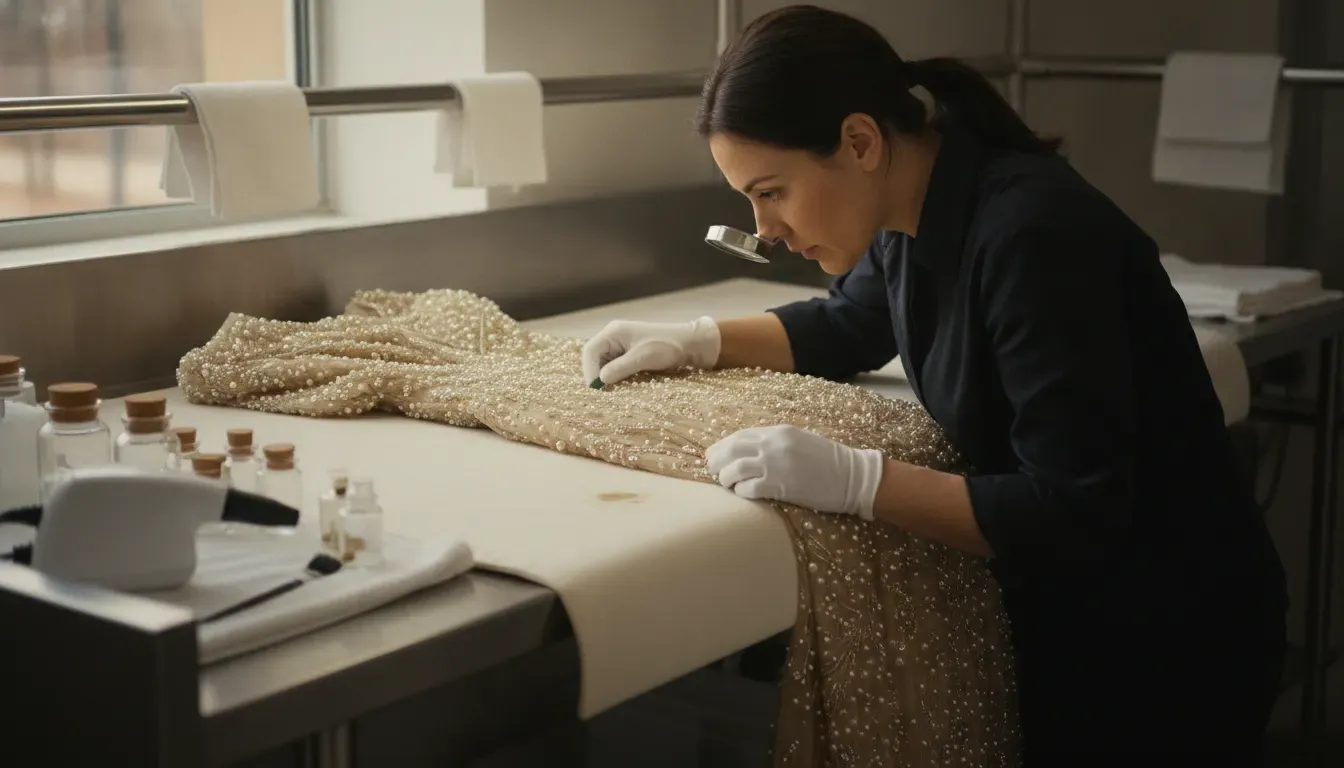
Delicate does not always mean dry clean, and a label that says "dry clean" should not be treated as permission to ignore the garment's condition. Silk, wool, rayon, acetate, tailored wool jackets, beaded dresses, and items with glued or stitched details can respond differently to moisture, solvent, heat, agitation, and pressing.
Questions a cleaner should consider
- What is the fiber? Natural and manufactured fibers can react differently to water, solvent, heat, and mechanical action.
- How is the garment built? Linings, interfacing, shoulder pads, pleats, and structured panels can change the risk profile.
- Are there embellishments? Beads, sequins, metallic details, glued trim, and decorative finishes may need special handling.
- Is the color stable? A professional may test or assess the risk of color transfer, fading, or bleeding.
- What happened before intake? Home stain treatments, spills, body oils, and earlier cleaning can affect the next process.
Do not rub a delicate stain aggressively at home or apply a new product without considering the care label. Tell the cleaner what caused the mark and what, if anything, has already been applied. That information helps the professional choose a treatment strategy and set realistic expectations.
Environmental Comparison: Dry Cleaning vs. Wet Cleaning
The environmental difference between dry cleaning and wet cleaning depends on the specific equipment, solvent, water use, detergent, energy source, wastewater controls, and operating practices. Professional wet cleaning avoids the use of a dry-cleaning solvent, but it still uses water, detergent, electricity, and drying energy. Dry cleaning is not automatically harmful, either, because modern facilities can use controlled equipment and regulated handling practices.
U.S. Environmental Protection Agency materials describe wet cleaning as an alternative garment-care process and evaluate its performance alongside conventional dry-cleaning methods. The California Air Resources Board's Wet Cleaning Guidebook also emphasizes equipment, training, garment evaluation, and process control rather than a one-size-fits-all answer.
For dry-cleaning operations, the U.S. Environmental Protection Agency's dry-cleaning information explains operational practices and pollution-control considerations. These sources support a practical conclusion: ask how a cleaner handles your garment and its cleaning medium instead of relying on a simple "green" label.
What to ask about environmental practices
- Which process is recommended for this specific garment, and why?
- How does the facility manage solvent, water, detergent, and drying requirements?
- How are delicate items inspected before and after cleaning?
- What information should the customer provide about stains or previous treatments?
When Should You Choose Dry Cleaning vs. Wet Cleaning?
Choose between dry cleaning and wet cleaning by starting with the care label and then considering the garment's material, structure, decoration, condition, and stain history. If the item is valuable, formal, tailored, heavily embellished, or difficult to replace, professional inspection is more useful than guessing from the fabric name alone.
Dry cleaning may be worth discussing when
- The garment is structured or tailored, such as a suit jacket or formal jacket.
- The item has a dry-clean-only instruction or a construction that may lose shape in ordinary washing.
- The garment includes lining, interfacing, pleats, or trim that needs careful evaluation.
- The piece has a stain that needs targeted professional assessment.
- The item is a formal, high-value, vintage, or sentimental garment.
Wet cleaning may be worth discussing when
- The care label permits water-based cleaning and the fiber is suitable for it.
- The garment needs a controlled water-based process rather than a routine home wash.
- The item has soil that responds well to water and detergent when handled professionally.
- The cleaner confirms that shrinkage, distortion, color change, and trim risks are acceptable.
These are discussion points, not guarantees. A garment can have a care label that does not fully explain its condition, and cleaning can reveal pre-existing weakness. Share the label, point out stains, and mention home treatments before the cleaner begins.
How Should You Prepare a Garment for Professional Cleaning?
Prepare a garment for professional cleaning by checking the care label, emptying pockets, identifying stains, noting loose details, and telling the cleaner about any home treatment. Good intake information gives the professional a clearer picture of the garment's condition and helps prevent avoidable surprises.
- Read the care label. Look for the recommended method, temperature limits, drying instructions, and warnings about special materials.
- Empty every pocket. Pens, cosmetics, receipts, tissues, and other objects can create new damage during cleaning.
- Point out stains. Explain what spilled, when it happened, and whether you applied water, soap, stain remover, or another product.
- Identify existing damage. Mention loose buttons, weak seams, missing beads, pulled threads, discoloration, or worn areas.
- Share timing needs honestly. Ask about inspection and turnaround before leaving an item needed for a specific event.
Washed Works provides professional dry cleaning for suits, dresses, delicate garments, and specialty items in Glendale. The service page is a useful starting point for learning about the local offering, while the broader Dry Cleaning Garment Care Los Angeles: Complete Guide covers the wider garment-care framework for readers who want more detail.
Frequently Asked Questions About Dry Cleaning and Wet Cleaning
No. Professional wet cleaning uses controlled water, detergent, mechanical action, drying, and finishing selected for the garment. It is not the same as putting every item into a standard home washing-machine cycle.
Is dry cleaning completely dry?
No. Dry cleaning uses a liquid solvent rather than water, so the term describes the cleaning medium, not the absence of liquid. The solvent is removed during the cleaning and drying process before the garment is finished.
Which method is best for silk?
There is no universal answer for silk. The cleaner should consider the silk's weave, dye stability, construction, trim, care label, stains, and prior treatments before recommending dry cleaning or controlled wet cleaning.
Can dry cleaning remove every stain?
No. Stain removal depends on the substance, age, fiber, dye, previous treatments, and whether the stain has caused permanent damage. A professional can assess the mark and explain what treatment may be appropriate, but no method guarantees complete removal.
Is wet cleaning more environmentally friendly than dry cleaning?
Not in every situation. Wet cleaning avoids a dry-cleaning solvent but still uses water, detergent, energy, and wastewater management. Environmental performance depends on the equipment, process controls, facility practices, and the garment's needs.
How do I choose between dry cleaning and wet cleaning?
Start with the care label, then ask a professional to evaluate the garment's fiber, construction, color, trim, condition, and stain history. Choose the method that fits the specific item rather than assuming one method is always best.
For everyday clothing that belongs in a water-based laundry routine, learn about Washed Works wash and fold pickup and delivery.